

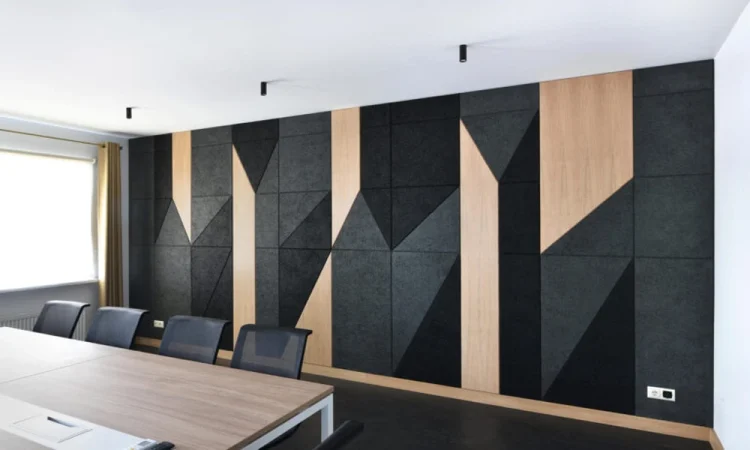
It’s easy to assume that installing acoustic panels is a quick fix. You pick a few panels, mount them on the wall or ceiling, and expect the space to instantly feel better. Sometimes that works. But more often, the results depend on what you consider before installation even begins.
Acoustic panels are effective, but only when they match the space they’re going into. A bit of planning upfront can save you from wasting time, money, and effort on something that doesn’t deliver the improvement you were expecting.
Here’s what to look at before you install anything.
Start with the actual problem.
Before choosing panels, it’s important to understand what you’re trying to fix.
- Is it echo that makes conversations feel slightly unclear?
- Is it sound spreading too easily across the room?
- Is it a general sense of acoustic build-up when the space gets busy?
Different issues require slightly different approaches.
Acoustic panels are designed to absorb sound, but they won’t solve every type of noise problem. For example, they won’t completely block sound coming through walls from neighbouring units.
Being clear about the problem helps you choose the right solution instead of expecting panels to do something they’re not designed for.
Look at the surfaces in your space.
Take a moment to scan the room.
Hard surfaces like glass, concrete, tiles, and bare plaster reflect sound strongly. The more of these surfaces you have, the more likely sound will bounce around and build up.
If your space has a lot of these materials, acoustic panels will have a bigger impact. If it already has carpets, curtains, and soft furniture, you may need fewer panels or more targeted placement.
Understanding what’s already in the room helps you avoid over- or under-treating the space.
Identify key reflection points.
One of the most important things to consider is where sound is actually reflecting.
These are usually:
- Walls at ear level where conversations happen
- Ceilings above activity zones
- Large, uninterrupted surfaces
Placing panels at these points makes them far more effective.
Installing panels in random locations or purely based on visual preference often leads to disappointing results. Even high-quality panels won’t perform well if they’re not positioned where sound reflections are strongest.
Consider the size and layout of the room.
Room size changes how sound behaves.
In larger rooms or spaces with high ceilings, sound has more room to travel and reflect. These spaces often need more coverage or a combination of ceiling and wall panels.
Smaller rooms may require fewer panels, but placement becomes more critical. A poorly placed panel in a small room can have very little impact.
The layout matters too. Open-plan spaces allow sound to move freely, so panels may need to be distributed across different zones rather than concentrated in one area.
Choose the right type of panel.
Not all acoustic panels are the same, and choosing the right type makes a difference.
- Fabric-wrapped panels are versatile and work well in most environments.
- Foam panels are often used in specialised spaces like studios.
- Decorative panels combine acoustic performance with visual design.
- Mineral fibre panels are common in commercial ceiling systems.
Each type has its own strengths. The best choice depends on how the space is used and how visible the panels will be.
It’s not just about performance. It’s also about how the panels fit into the overall design.
Think about placement before installation.
It might sound obvious, but placement should be planned before you start installing.
Ask yourself:
Where do people usually sit or stand?
Where does most of the sound come from?
Which surfaces are likely to reflect the most sound?
Answering these questions helps you position panels where they’ll actually make a difference.
A small number of well-placed panels can often outperform a larger number installed without a clear plan.
Don’t overlook the ceiling.
Ceilings are often ignored, but they play a major role in sound reflection.
In rooms with hard ceilings, sound reflects downward and spreads across the space. This can contribute to that constant background activity you feel in busy environments.
Ceiling panels or suspended baffles can help intercept this. They’re especially useful in offices, dining areas, and rooms with higher ceilings.
Even adding a few panels above key areas can improve overall balance.
Set realistic expectations.
Acoustic panels improve how sound behaves within a room. They don’t eliminate sound completely.
You’ll still hear conversations, movement, and daily activity. The difference is that these sounds feel more controlled and less overwhelming.
Understanding this upfront helps avoid disappointment. The goal is better sound quality, not complete isolation.
Consider future adjustments.
Acoustic treatment doesn’t have to be fixed permanently from the start.
In many cases, it’s helpful to begin with a basic setup and adjust over time. You might find that certain areas need more treatment, or that panel placement can be improved after using the space for a while.
Choosing mounting methods that allow for repositioning can make this process easier.
Final Thoughts
Installing acoustic panels isn’t just about adding a product to a room. It’s about understanding how sound behaves in that space and making thoughtful decisions before installation begins.
When you take the time to assess the problem, identify key reflection points, and choose the right type of panel, the results become much more noticeable.
The space feels more comfortable, conversations become easier to follow, and the overall environment works better for the people using it.
A little planning goes a long way in making sure your acoustic panels actually deliver what you expect.